


CPT - Loess (Johnson, 2006)
This p-y curve is derived from cone penetration test (CPT) results and is suitable for loess soils. Its shape is shown in Figure 1.
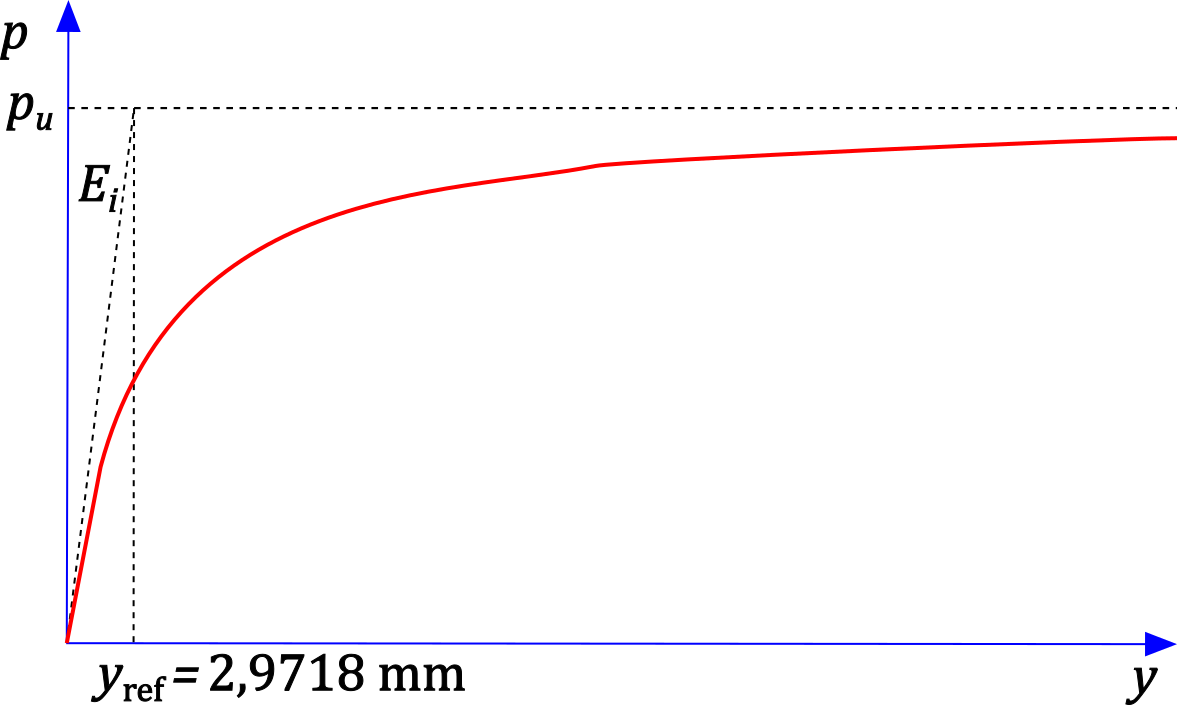 Figure 1: p-y curve for loess (Johnson, 2006)
The input parameters for determining the curve are:
d [m] | – | pile diameter |
z [m] | – | depth below the ground surface |
qc [MPa] | – | cone resistance from the cone penetration test |
For this p-y curve, the cone resistance qc is reduced linearly, and the reduced value qc,red is used in further calculations. The reduction is applied so that half of the qc value is used at the ground surface, and the full qc value is used from a depth of z = 2d downward.
Based on the CPT data, the ultimate unit soil resistance pu0 is determined as follows:

where NCPT is the CPT correlation factor, which has a value of 0.409.
The ultimate soil resistance pu is determined separately for static and cyclic loading, depending on the type of loading.
For static loading:

for cyclic loading:

where: | Cn | - | cyclic degradation constant, which has a value of 0.24 |
N | - | number of load cycles. The program uses N = 10,000 |
To define the shape of the curve, a reference displacement yref is introduced. This is the displacement at which the tangent to the curve at the origin reaches the ultimate soil resistance pu. This value was fixed based on load tests at yref = 2.9718 mm.
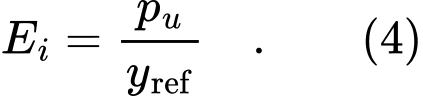
The initial soil modulus Ei, which defines the slope of the tangent to the p-y curve at the origin, is then given by:
The curve itself is then described using the secant modulus Es, which expresses the slope of the curve at each of its points. The secant modulus Es is given by the hyperbolic function:
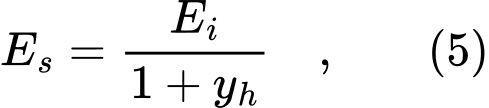
where the hyperbolic term yh is a function of displacement according to:

where a is the correlation constant, which has a value of 0.1.
The resulting p-y curve is then described by a seemingly linear relationship:

in which the nonlinearity is expressed by the hyperbolic variation of the secant modulus Es.
References:
[1] R. Johnson, R. L. Parsons, S. Dapp, D. Brown: SOIL CHARACTERIZATION AND P-Y CURVE DEVELOPMENT FOR LOESS, Report Number: K-TRAN-KU-05-3, University of Kansas, Lawrence, KS USA, 2007